
Most people don’t go looking for vision services until something happens.
Maybe it’s a diagnosis. It’s a moment when you realized the vision loss you’d been quietly adjusting around has gotten to a point where adjusting isn’t enough anymore. Maybe someone handed you a pamphlet in a doctor’s office and you’ve been carrying it around for three weeks without opening it.
Whatever brought you here, the question underneath is the same one most people have: what is actually available, who is it for, and how do I get it without spending months figuring out a system that wasn’t designed to be easy to navigate?
That’s what this is for. Jacksonville has real services for visually impaired residents. Some are free. Some are things you’re legally entitled to. And most of them, the people who need them most have never heard of.
Understanding Visual Impairment Before You Can Use the System
What visual impairment actually means
Visual impairment is not a single thing. It’s a wide spectrum, and where someone falls on that spectrum determines what services they qualify for, what training makes sense, and what tools will actually help them.
At one end is low vision, defined as visual acuity between 20/70 and 20/400 with the best possible correction. Someone with low vision can often still see, but not well enough to do many things safely or independently without help. At the other end is legal blindness, defined in the United States as visual acuity of 20/200 or worse, or a visual field of 20 degrees or less, in the better-seeing eye with best correction. That specific threshold matters because it’s what most government programs use to determine eligibility.
Legal blindness does not mean total darkness. Most people who qualify as legally blind still have some functional vision. Total blindness, defined clinically as no light perception at all, is actually relatively rare. The majority of people navigating vision loss in Jacksonville are somewhere in the middle of that spectrum, working with partial vision that varies by lighting, contrast, and distance. Understanding where you or your family member actually falls on that spectrum is the first step toward knowing what help is available.
Why functional vision matters more than the number
The clinical number is important for eligibility. But functional vision, how someone actually uses their remaining sight in real-world situations, is what shapes the training and tools that will genuinely help.
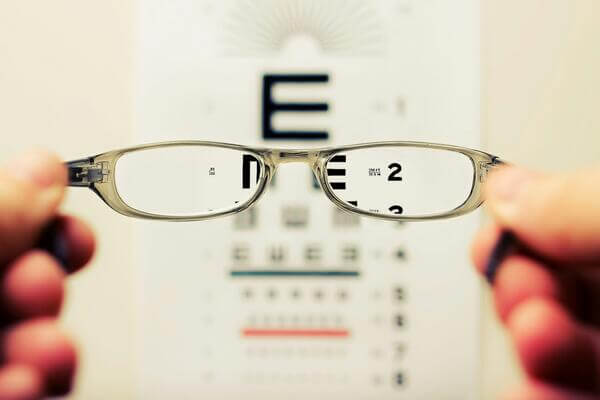
A functional vision evaluation looks at things an eye chart doesn’t. Can a person scan a room to locate a familiar face? What lighting conditions help them read safely? How do they navigate outdoors when the terrain changes? These questions have practical answers that directly inform what services make sense. A low vision specialist or vision rehabilitation therapist can perform this kind of evaluation, and the results give both the person and their care team something concrete to work from.
For Jacksonville residents who aren’t sure where to start, the Jacksonville Council of the Blind can connect you with qualified professionals who perform these evaluations. Knowing exactly where you stand clinically and functionally is not a discouraging exercise. It’s the thing that makes everything else more targeted and more useful.

The Services That Actually Exist in Jacksonville
Florida Division of Blind Services: where most things start
The Florida Division of Blind Services is the state agency that coordinates most of what’s available to visually impaired Floridians, and it’s the first call most people should make.
DBS serves a wide range of people. Working-age adults who want to keep their jobs or find new ones. Seniors adjusting to age-related vision loss. Students transitioning from high school to college or the workforce. People who just received a diagnosis and have no idea what comes next. The core services are free for qualifying individuals, which surprises a lot of people.
| Florida Division of Blind Services — Jacksonville District Phone: (904) 992-2044 • dbs.fldoe.org Statewide: (850) 245-0300 |
What DBS can connect you with depends on your situation, but commonly includes orientation and mobility training, vision rehabilitation therapy, assistive technology services, vocational rehabilitation for employment, and transition support for students. The process starts with a call. A counselor walks you through what you qualify for based on your specific circumstances. You don’t need to know exactly what you need before you call. That’s what the counselor figures out with you.
Vision rehabilitation: what it actually involves
Vision rehabilitation is a term that gets used a lot without much explanation. Here’s what it actually is.
A vision rehabilitation therapist works with visually impaired people in their real environments, their home, their workplace, their neighborhood, teaching practical skills that make daily life safer and more independent. Cooking safely without full vision. Managing medications without mixing them up. Labeling clothes so getting dressed isn’t a guessing game. Navigating a phone or computer using accessibility features. These are not small things. They’re the difference between needing help every day and not needing it.
Orientation and mobility training is its own specialty within rehabilitation. An O&M specialist teaches a person to travel safely and independently using a white cane, environmental cues, and memorized routes. Crossing a busy intersection by listening to traffic. Finding a specific store in an unfamiliar shopping center. Getting on and off a bus without assistance. The goal is not just safety. It’s the kind of independence that makes a person feel like themselves again after vision loss has taken that feeling away.
Both of these services are available through DBS, and for Jacksonville residents, the Vision Education and Rehabilitation Center at FSCJ’s Downtown Campus is where much of this hands-on training happens. Their number is (904) 633-8220. People walk in feeling like they’ve lost control of their own lives and walk out with a different sense of what’s possible. That’s not an exaggeration. It’s what rehabilitation is designed to do.
| Worth knowing The World Health Organization estimates that 80 percent of all visual impairment is either preventable or curable with treatment. Regular eye exams and early intervention protect sight that, once lost, cannot be recovered. For Jacksonville residents in higher-risk groups, getting screened is not optional. |
Government benefits and legal protections you may not know about
A legal blindness classification doesn’t just open the door to rehabilitation services. It also triggers a set of federal and state benefits that a lot of people qualify for and never claim.
The Social Security Administration provides disability benefits through SSDI and SSI for individuals who meet the legal blindness standard and the relevant financial or work history criteria. The IRS offers an additional standard deduction for legally blind taxpayers, a benefit that doesn’t require any special application and gets missed constantly. The Americans with Disabilities Act requires employers, public transportation systems, and public accommodations to provide accessibility for visually impaired individuals, which means workplace accommodations are a legal right, not a favor.
At the state level, Florida’s Division of Blind Services can fund assistive technology, including screen readers, magnification software, and refreshable Braille displays, through vocational rehabilitation for individuals pursuing employment. JAWS, which is the industry-standard screen reader for Windows and typically costs around a thousand dollars out of pocket, is frequently covered through this pathway. If you’ve been told you need assistive technology and been put off by the price, talking to a DBS counselor first is worth doing before assuming you have to pay for it yourself.
Everyday Resources Most Visually Impaired Jacksonville Residents Don’t Know About
Getting around when driving is off the table
Losing the ability to drive is one of the hardest parts of vision loss for a lot of people. Not just practically, but in terms of what it means. Independence. Spontaneity. Getting somewhere on your own schedule without asking anyone for anything.
JTA Connexion and Connexion Plus provide door-to-door paratransit service for eligible riders who cannot use fixed-route buses because of a disability. It’s not perfect and it requires planning ahead, but it works. People use it to get to medical appointments, grocery stores, JCB meetings, and everywhere else. Uzurv is a partnership through JTA that offers more flexible on-demand ride booking through an app, closer to what most people are used to with rideshare services. If you haven’t looked into paratransit eligibility yet, that’s a concrete next step.
Reading, books, and staying connected to information
The Talking Book Library is a service of the Florida Division of Library and Information Services that most visually impaired Jacksonville residents have never heard of, which is a shame because it’s genuinely useful.
It provides free audiobooks, Braille materials, and talking-book players delivered directly to your door. Not a subscription service. Not a trial. Free, through the National Library Service, and accessible through Jacksonville Public Library. If reading was a significant part of your life before vision loss, this is one of the more direct ways to bring it back. No screen strain. No accessibility workarounds. Just books.
Beyond the library, accessible technology has made staying connected to information significantly more manageable than it was even five years ago. Screen readers on smartphones, talking GPS navigation, voice-controlled smart home devices, and apps built specifically for blind users have changed what daily life looks like for a lot of visually impaired people in Jacksonville. The learning curve is real, but it’s not as steep as most people assume going in.
What Nobody Tells You When You’re Navigating This for the First Time
The system is confusing by design, and that’s not your fault
The landscape of services for visually impaired people in Jacksonville is genuinely complicated. DBS, VERC, the Talking Book Library, JTA Connexion, Social Security, the ADA, assistive technology funding, IEP rights for students, vocational rehabilitation for adults. These are separate systems with separate eligibility criteria, separate application processes, and separate points of contact. Nobody hands you a map when you walk out of the doctor’s office with a diagnosis.
That’s not an accident of poor planning. It’s a reflection of how disability services in the United States are structured, spread across federal, state, and local systems that were built at different times for different purposes and never fully integrated. Navigating it alone is genuinely hard. Most people miss services they’re entitled to not because they didn’t try but because they didn’t know where to look or who to ask.
This is one of the most practical things the Jacksonville Council of the Blind does. Members who have navigated these systems themselves can walk newly diagnosed individuals and their families through what exists, what they likely qualify for, and what the actual process of accessing each service looks like. That kind of peer knowledge is different from a brochure. It’s the information that comes from having actually done it.
You are going to figure this out
The first weeks after a diagnosis or after vision loss reaches a point where it can no longer be quietly managed are genuinely disorienting. The list of things to figure out feels long. The system feels opaque. The gap between where you are and where you want to be feels wide.
It narrows. Not all at once and not without effort, but it narrows.
People in Jacksonville are navigating vision loss right now and living full, self-directed lives. They have jobs, relationships, routines, and hobbies. We travel, cook, read, use computers, raise families, and participate in their community. They do some of it differently than they used to. Some of it with tools they didn’t expect to need. But they do it.
What made the difference for most of them wasn’t one single service or one piece of technology. It was knowing that the resources existed, knowing how to access them, and having people around who understood the road they were on. That’s what the Jacksonville Council of the Blind is here to provide.
One Last Thing
If you’re reading this for yourself, or for someone you love, the fact that you’re here means you’re already doing the right thing. Looking for information. Trying to understand what’s available. Not waiting until things get worse to figure out what help exists.
The services in Jacksonville are real. The community is real. And the path forward, even when it doesn’t look like the one you planned, is a path thousands of people in this city are walking every day.
When you’re ready, there’s a seat at our table. No pressure. No timeline. Just people who get it and an open door.